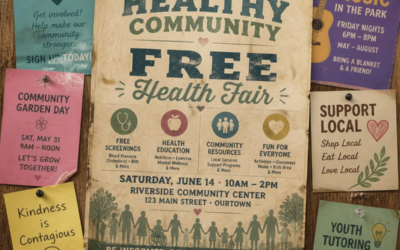
A strong local reputation and genuine online discoverability are not the same asset, and treating them as interchangeable is why well-regarded nonprofits still don’t show up when the right person searches. Reputation is built through years of relationships, referrals, and visible community presence. Discoverability is built through whether a stranger, typing what they need into a search bar, can find your organization without already knowing your name.
Most nonprofit leaders can tell you exactly how well-known their organization is. Fewer can tell you how findable it is. Those turn out to be very different numbers.
The Confidence That Comes From Being Known
Talk to the executive director of a nonprofit that’s been serving the same community for fifteen or twenty years, and you’ll hear a familiar kind of confidence. Board members are recognized at the grocery store. Staff field calls from people who’ve called before. A local reporter has the ED’s number saved. By every measure that matters inside the organization, it is known.
That confidence is earned, and it’s real. It’s also not the thing this article is about.
What “Well-Known” Actually Measures
Reputation measures recognition among people who already know you exist. It’s a report card graded by your existing network: past clients, donors, partners, neighbors who’ve watched you grow. It says nothing about the person who doesn’t know you exist yet, and has no reason to type your name into anything.
That second group is larger than most organizations assume, and it’s the group a website is actually for. A person with a need doesn’t wake up wondering which nonprofit might help them. They wonder whether help exists at all, and they search for the need, not the name.
How People Actually Search When They Don’t Know Your Name
This isn’t a hunch about how people behave online. Google’s own data shows a clear and sustained shift toward searching for what someone needs, in a specific place, at a specific time, rather than searching for the name of a specific organization. Google reported 900%+ growth in mobile searches for phrases like “___ near me today/tonight,” and 150%+ growth for “___ near me now,” comparing search behavior from mid-to-late 2015 against mid-to-late 2017 (Gevelber, 2018). That’s older data, and search behavior has only moved further in this direction since, but the underlying pattern hasn’t reversed: people search by need and immediacy, not by institution.
A parent doesn’t search “[Your Organization] youth programs.” They search “free art class for a 10-year-old near me.” If the page that answers that exact question doesn’t exist, or exists but is written in your language instead of theirs, your reputation among people who already know you does nothing to close that gap.
The Blind Spot This Creates for Leadership
People who work inside a nonprofit experience their own information as available, because someone on staff knows it. The financing program is described on page 14 of a PDF. The application deadline is common knowledge at the front desk. From inside, nothing feels hidden.
A visitor doesn’t get that context. They get a homepage, a menu, and whatever a search engine happens to surface. If the specific answer isn’t there, in their words, the fact that your staff knows it doesn’t help them at all. The organization can be simultaneously well-known and functionally invisible to the person who needs it most, right now.
A Reputation Test You Can Run Today
Here’s a fast way to see whether this gap exists in your organization: ask three people who are genuinely outside your existing network, a new neighbor, a distant relative, a friend of a board member, to try to find one specific program you offer, using only their own words and no knowledge of your organization’s name. Watch where they land, and how long it takes.
If they find a clear, dedicated page quickly, your discoverability matches your reputation. If they land on a general page, an old PDF, or nothing at all, that gap is exactly what’s costing you the people who don’t already know to look for you.
Where This Leads
This distinction, between what your community already knows and what a stranger searching cold can actually find, is the starting point of a longer diagnostic process, not the end of one. If this resonated, it’s the same idea the first chapter of Leap The Nonprofit Discoverability Gap opens with, and the book is free to read.
FAQ
Is being well-known in my community the same as being discoverable online? No. Being well-known means people who already have some connection to your organization recognize your name. Being discoverable means a stranger with no prior knowledge of you can find your specific program using their own language. An organization can score high on one and low on the other.
Why doesn’t my nonprofit show up when people search for the services we offer? Usually because the page that answers that exact question doesn’t exist as its own destination, or because it’s written in internal, institutional language rather than the words a searcher would actually use.
How can I tell if my nonprofit has a discoverability gap? Run the reputation test above: have someone outside your network try to find one specific program using only their own words, with no knowledge of your organization’s name. Where they land tells you what you need to know.
Does local search behavior like “near me” searches actually matter for small nonprofits, not just businesses? Yes. The same need-based, immediate search behavior documented by Google applies to anyone searching for help, a class, or a resource, not just anyone searching for a store or restaurant. A search for “food assistance near me” behaves the same way as “pizza near me.”
What’s the first step to closing a nonprofit’s discoverability gap? Start by identifying one real program and testing whether a stranger can find it. That single test, repeated across your priority programs, is the beginning of a full inventory.
___________________________________________________________________________________
Sources
- Gevelber, Lisa. “How Near Me Shopping Searches Have Changed.” Think with Google / Google for Business, May 15, 2018. Source data: Google Data, U.S., July–Dec. 2015 vs. July–Dec. 2017. https://business.google.com/uk/think/marketing-strategies/near-me-searches/